Custom Orthotics in Thornhill
Off-the-shelf insoles treat the symptom. Custom orthotics are built from a precise cast of your foot and prescribed to correct the biomechanical cause of your pain. At RehabOne Plus, your practitioner runs a full lower-limb assessment and gait analysis before any casting takes place, so the orthotic addresses the actual problem, not a generic foot scan.
Most extended health plans cover custom orthotics in Ontario, typically between $300–$500 per pair. We handle the prescription paperwork and direct-bill where your plan allows.
Could Custom Orthotics Help You?
Custom orthotics are most effective when:
- You have sharp heel pain in the morning, especially with first steps (plantar fasciitis)
- Your arches are flat and your feet roll inward when you walk (overpronation)
- You have high arches that cause instability and ball-of-foot pain
- Your knee, hip or low back pain worsens with standing or walking
- You have tried store-bought arch supports without lasting relief
- You spend long hours on your feet at work and deal with chronic foot fatigue
- You have had repeat lower-limb injuries (ankle sprains, shin splints, IT band issues)
- You have diabetes or any condition affecting foot sensation or circulation
What Makes Custom Orthotics Different
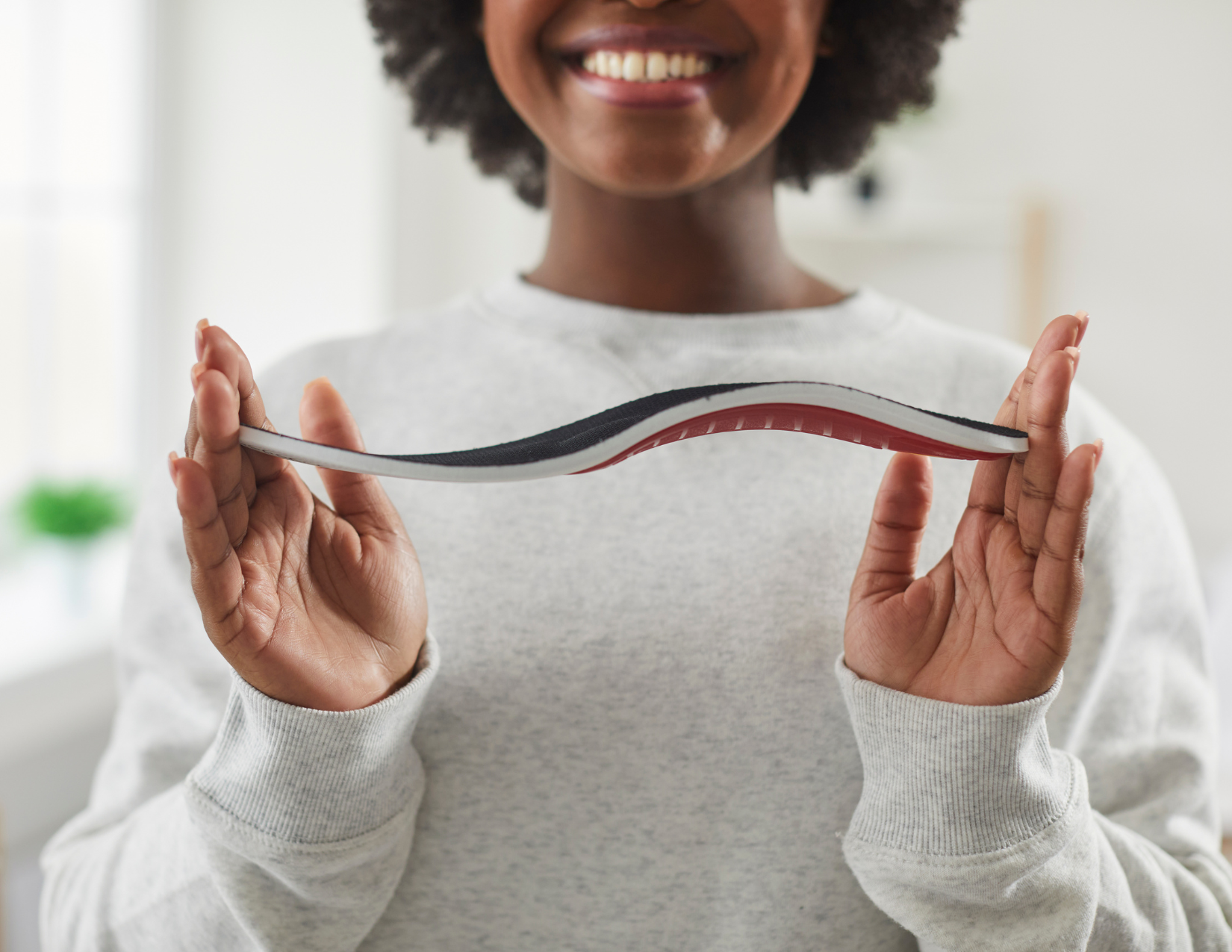
Custom foot orthotics are prescription medical devices not a one-size-fits-all insole. Yours are fabricated in a certified laboratory from a 3D volumetric foam cast of your foot, taken in a corrected neutral position. They redistribute pressure, realign the ankle, knee, hip, and spine, and address the root cause of the pain rather than masking it.
Your practitioner performs the full biomechanical assessment and gait analysis before any casting takes place. The result is a pair of orthotics built precisely for your foot, your condition, and your footwear.
Conditions Treated with Custom Orthotics
Plantar Fasciitis & Heel Pain
The most common reason patients come in for custom orthotics. Sharp pain on the bottom of the heel, worst in the morning. Orthotics reduce tension on the plantar fascia by correcting pronation and providing targeted arch and heel support.
Flat Feet (Overpronation)
When the medial arch collapses, the ankle rolls inward and the knee, hip, and lumbar spine compensate. Custom orthotics give your foot medial arch support and realign the subtalar joint, correcting the source of downstream pain.
High Arches (Pes Cavus)
High-arched feet have poor shock absorption and distribute force unevenly. Orthotics provide the cushioning and lateral support the foot lacks, reducing ball-of-foot pain, ankle instability, and stress-fracture risk.
Metatarsalgia & Ball-of-Foot Pain
Excessive pressure on the metatarsal heads causes pain, calluses, and sometimes Morton’s neuroma. Orthotics with a metatarsal pad redistribute pressure away from the affected area.
Achilles Tendinopathy
Chronic Achilles pain is often driven by excessive foot pronation that loads the tendon asymmetrically. Custom orthotics correct the pronation pattern, reducing tensile load. We frequently combine this with ultrasound therapy.
Morton’s Neuroma
Compression of the interdigital nerve between the third and fourth toes causes burning, shooting pain in the forefoot. Orthotics with a metatarsal dome reduce that nerve compression and give lasting symptom relief.
Knee Pain (Patellofemoral)
Excessive foot pronation causes the tibia and femur to rotate internally, increasing pressure across the kneecap. Custom orthotics correct foot alignment and reduce the rotational force that drives anterior knee pain.
IT Band Syndrome & Shin Splints
Lateral knee pain in runners and medial tibial stress syndrome are often driven by overpronation or a leg-length discrepancy. Custom orthotics correct the asymmetry that overloads the IT band and tibia.
Low Back Pain from Foot Mechanics
A leg-length discrepancy of even a few millimetres creates a pelvic tilt that rotates the lumbar spine. Orthotics with a heel lift or corrective posting can resolve low back pain that originates below the pelvis.
Diabetic & Therapeutic Orthotics
Patients with diabetes, peripheral neuropathy or Charcot foot need specialized therapeutic orthotics designed to protect at-risk skin and distribute pressure away from ulcer-prone areas.
How Your Custom Orthotics Are Made
Biomechanical Assessment
Full lower-limb assessment: joint range of motion, muscle strength and flexibility, subtalar joint neutral position, forefoot and rearfoot alignment, and leg length. This is the clinical foundation of your prescription.
Gait Analysis & 3D Foam Cast
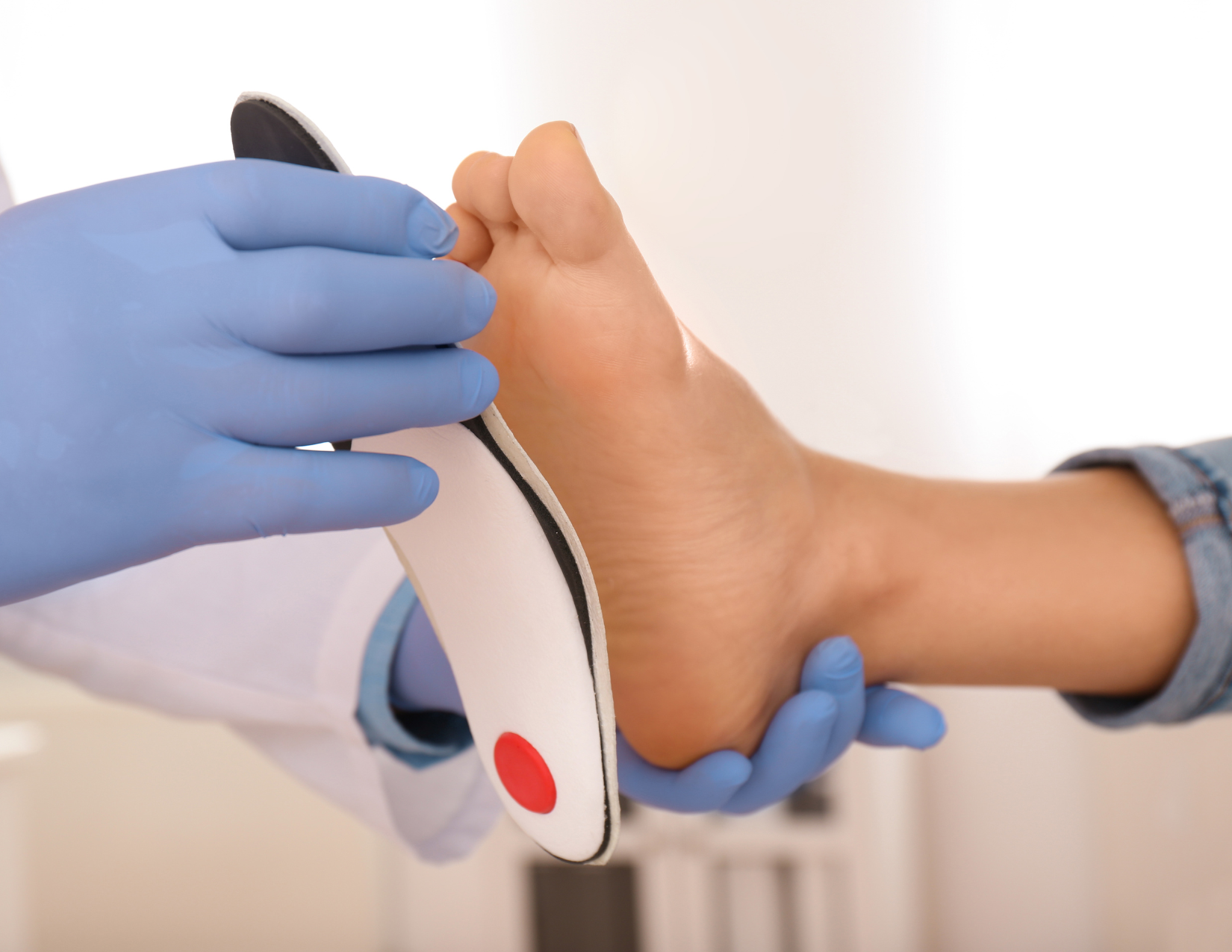
You walk while your practitioner observes loading patterns, foot strike, pronation or supination, and knee or hip tracking. Your feet are then cast in a precise neutral subtalar position using 3D volumetric foam, the industry standard for insurance reimbursement.
Lab Fabrication & Fitting
The cast and prescription are sent to a certified orthotic laboratory. Custom orthotics typically take 2–3 weeks to fabricate. When they arrive, you are fitted, instructed on break-in, and assessed for any modifications, included at no extra charge.
Are Custom Orthotics Covered by Insurance?
Yes. Most extended health plans in Ontario cover custom orthotics, typically between $300–$500 per pair (some plans up to $600+), with a renewal period of 1–2 years.
What insurers require
A prescription from a licensed healthcare provider, documentation of the biomechanical assessment and gait analysis, a 3D foam cast (most plans do not accept computerized scanning alone), and a lab invoice showing custom fabrication. We provide all of this.
MVA & WSIB coverage
Custom orthotics are covered as supplementary goods under SABS (auto-accident benefits) and through WSIB for eligible workplace injuries. See our MVA rehab and WSIB pages for details.
Direct billing
We provide all required documentation and offer direct billing to most extended health providers. Call (647) 612-9000 to check your benefits before you come in.
Why Thornhill Patients Choose RehabOne Plus for Custom Orthotics
Practitioner-led assessment
A full biomechanical evaluation and gait analysis happens before any prescription is written. You get orthotics that address the actual mechanical cause of your pain, not a generic prescription based on a pressure scan.
3D volumetric foam casting
The industry standard for insurance compliance and clinical accuracy. Most insurers require foam casting, not pressure-plate scanning, for reimbursement.
Integrated with your rehab plan
Orthotics work best when they’re part of a treatment plan, not a stand-alone purchase. We combine them with targeted strength and mobility work, and modifications after fitting are included at no extra charge.
Common Questions About Custom Orthotics
What is the difference between custom orthotics and store-bought insoles?
Custom orthotics are prescription medical devices fabricated from a 3D cast of your foot in a corrected biomechanical position. Store-bought insoles offer generic arch support. Custom orthotics correct the specific foot mechanics driving your pain, and most extended health plans cover them.
Are custom orthotics covered by extended health insurance in Ontario?
Yes. Most Ontario plans cover custom orthotics, typically $300–$500 per pair. Insurers require a prescription, biomechanical assessment, and 3D foam cast. We provide all the documentation and direct-bill most providers.
How long does it take to get custom orthotics?
After your assessment and foam-casting appointment, custom orthotics typically take 2–3 weeks to fabricate. A fitting appointment follows to confirm fit and function, with any modifications made at no additional charge.
Can custom orthotics help with knee and back pain?
Yes. Abnormal foot mechanics, particularly overpronation and leg-length discrepancy, create compensatory stress in the knee, hip, and lumbar spine. Orthotics that correct foot alignment reduce this upstream loading, and we frequently prescribe them for patellofemoral knee pain, IT band syndrome, and low back pain.
How long do custom orthotics last?
Custom orthotics typically last 2–4 years depending on activity level, footwear, and materials. Most plans allow replacement every 1–2 years. A follow-up assessment at replacement time ensures your new prescription accounts for any changes in your mechanics.
Visit Our Clinic in Thornhill
Located on Yonge Street near Steeles Avenue. Free parking available. Bring your insurance card on your first visit, we handle the rest.