Knee Pain
Knee pain is one of the top reasons patients come to RehabOne Plus. It might be sharp pain at the front of the knee when going up stairs (patellofemoral pain), a dull ache after a long day on your feet (osteoarthritis) or pain right below the kneecap that flares with running or jumping (patellar tendinopathy, “jumper’s knee”). Whatever the source, recovery comes from finding the cause, not just managing the symptom.
What Knee Pain Feels Like
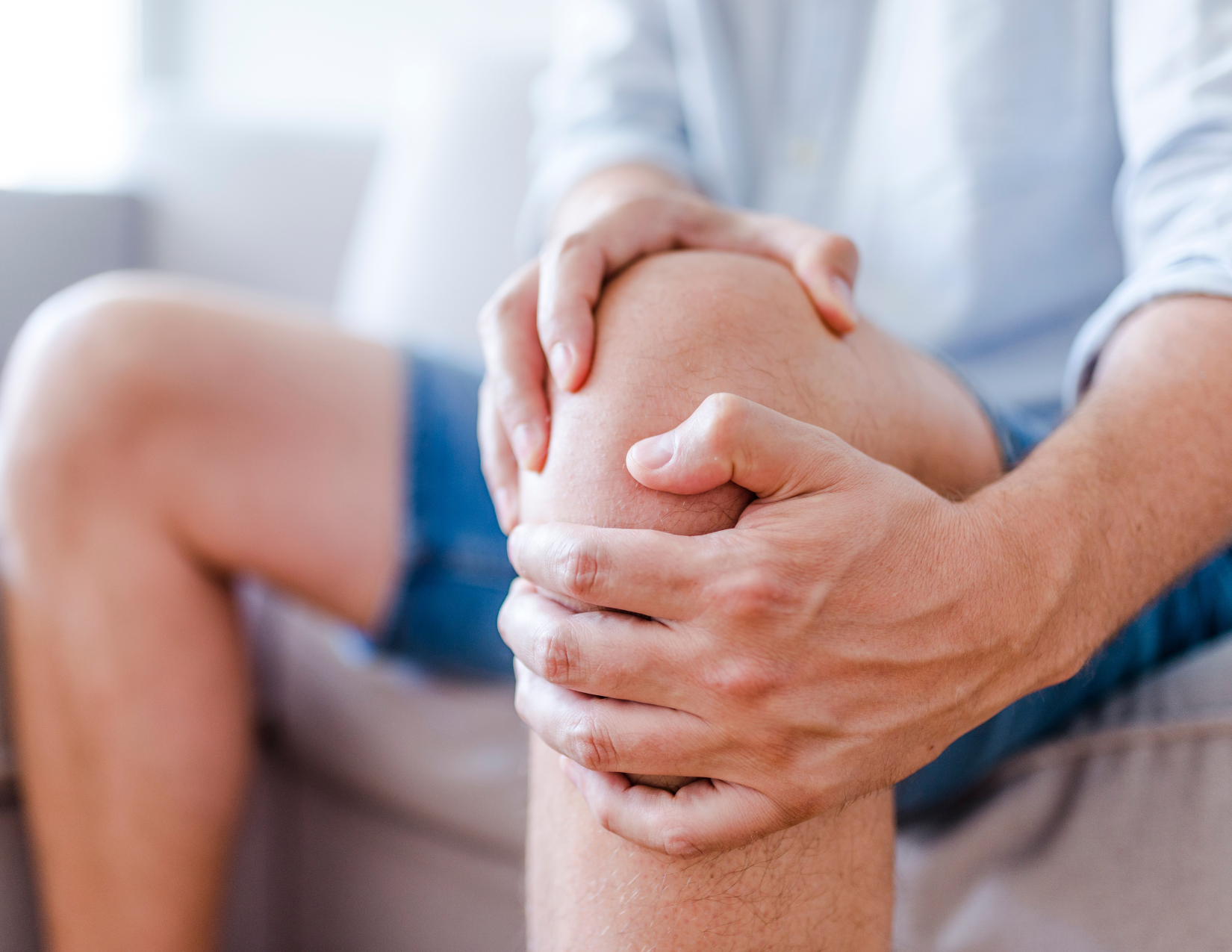
- Pain at the front of the kneecap, worst with stairs, squatting or after prolonged sitting
- Pain at the bottom or front of the kneecap when palpating the tendon
- Swelling, warmth or tenderness around the knee
- Stiffness when jumping, kneeling, squatting or climbing stairs
- Pain that increases with physical activity and lingers after
- Weakness in the quadriceps or calf
- Catching, locking or “giving way” of the knee
- Balance problems or instability with directional changes
Common Causes of Knee Pain
Patellofemoral pain syndrome
the most common cause of front-of-knee pain in active adults
Patellar tendinopathy (jumper’s knee)
from running, jumping or sports requiring directional change
Meniscus tear
often from a twist or squat with load
Ligament sprain
MCL, LCL or ACL injuries from contact or pivoting
Osteoarthritis
age-related wear of joint cartilage
IT band syndrome
lateral knee pain common in runners and cyclists
Bursitis
from prolonged kneeling or repetitive bending
Overuse
from rapid increases in activity volume or intensity
Poor foot mechanics
overpronation that increases rotational stress on the knee
How We Treat Knee Pain at RehabOne Plus
There is no single fix for knee pain, recovery comes from combining the right treatments for your specific case. Your practitioner will assess your knee in detail, identify the cause, and build a plan from these proven approaches:
Physiotherapy
Hands-on assessment and a progressive loading program tailored to your sport, work, and goals
Chiropractic care
Joint mobilization for the knee, hip, and lumbar spine where mechanical restriction is part of the problem
Ultrasound therapy
Deep heating to accelerate tendon and soft-tissue healing
Knee bracing
From light compression sleeves for return-to-sport to unloader braces for compartmental osteoarthritis
Custom orthotics
When foot pronation or leg-length discrepancy is driving knee stress
When to Come In
Book a consultation if your knee pain has lasted more than a week, is getting worse or is keeping you from sport, work or daily activities. We offer same-week appointments and direct-bill most insurers.
Risk Factors for Knee Pain
Knee pain is one of the most common reasons people in Thornhill book a physio assessment. The risk factors that contribute to most knee problems are predictable.
Sudden increase in activity
particularly running, jumping or hiking after time off
Weak quadriceps, hip abductors or gluteal muscles
that fail to control the knee
Excess body weight
which multiplies the load on the knee with every step
Sports with cutting and pivoting
like soccer, basketball, hockey
Previous knee injuries
(ACL, meniscus, kneecap dislocation) that did not fully rehab
Poor foot mechanics
particularly overpronation, that load the knee rotationally
Age-related cartilage thinning
more common after 50
Occupational kneeling or squatting
in trades like flooring or plumbing
Recovery Timeline for Knee Pain
The timeline depends on the type of knee pain and how long it has been around.
Patellofemoral pain
Most patellofemoral knee pain responds to 6 to 10 sessions over 6 to 10 weeks. The plan focuses on strengthening the quadriceps, glutes, and hip stabilizers along with retraining how you load the knee in daily activity.
Tendinopathy (jumper’s knee, runner’s knee, IT band)
Tendons heal slowly. Expect 10 to 16 sessions over 3 to 4 months. The plan combines progressive loading with hands-on soft tissue work and, where indicated, ultrasound therapy.
Meniscus or ligament injury
Minor meniscus tears and Grade I ligament sprains often heal in 6 to 8 weeks with conservative care. More significant injuries (Grade II/III sprains, displaced meniscus tears) need 12 to 24 weeks and may benefit from a knee brace, which we fit on-site. Learn more about knee bracing.
Knee osteoarthritis
OA is a chronic condition managed rather than cured. A 12 to 16 session program of strength training, manual therapy, and load management typically reduces pain significantly and delays the need for surgical intervention. Unloader braces are an option for severe compartmental OA.
Why Most Knee Pain Does Not Need an MRI
Imaging often shows wear and tear in middle-aged knees, but those findings rarely change the treatment plan. The first six weeks of physiotherapy and rehabilitation almost always proceed without imaging. We refer for MRI when:
- The knee locks, catches or gives way (mechanical symptoms suggesting a displaced meniscus)
- There is significant unexplained swelling within 12 hours of injury (suggesting ACL or fracture)
- Conservative treatment has not produced expected progress after 6 to 8 weeks
- Surgery is being seriously considered
Insurance Coverage for Knee Pain Treatment
Most extended health plans cover physiotherapy, chiropractic, for knee pain. Coverage is typically $300 to $1,500 annually per discipline. We direct-bill your insurer.
If your knee was injured in a car accident or at work treatment is fully covered through SABS or WSIB. Custom orthotics and knee bracing are also covered as supplementary goods under SABS and through most extended health plans. See our insurance & billing page for details.
Visit Our Clinic in Thornhill
Located on Yonge Street near Steeles Avenue. Free parking available. Bring your insurance card on your first visit, we handle the rest.