Sports Injuries
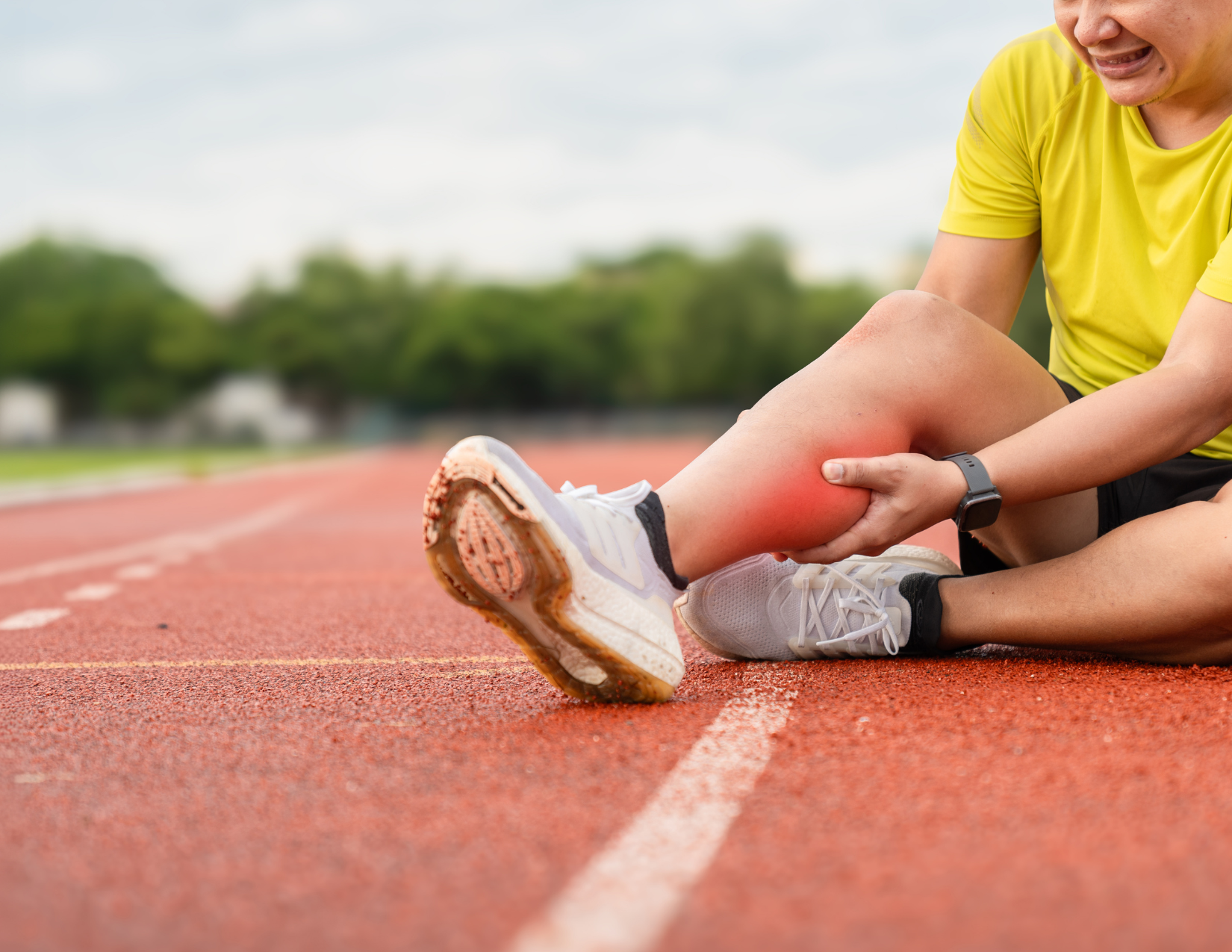
Strains affect muscles and tendons. Sprains affect ligaments. Either one can range from mildly annoying to severely disabling. The first 48–72 hours after the injury often determine how long recovery takes. At RehabOne Plus in Thornhill, we can usually see you within the same week, assess the severity, manage swelling and pain, and start a progressive rehab plan that gets you back to your sport, safely and at full capacity.
What Sports Injuries Feel Like
- Sudden, sharp pain at the moment of injury or a slow build over a training cycle
- Swelling, bruising or warmth in the affected area within the first 24 hours
- Loss of range of motion or a feeling that the joint is “stuck”
- Weakness, instability or a sense the joint may give way
- Pain that flares with the sport-specific movement (cutting, pushing off, overhead reach)
- Stiffness on waking that loosens up after warming up
- Recurring pain that comes back every time you return to the same activity
Common Causes of Sports Injuries
Acute trauma
tackles, falls, twisting under load, contact with another player
Overuse
rapid increase in training volume, intensity or frequency without adequate recovery
Inadequate warm-up
or returning to sport too quickly after time off
Muscle imbalance or weakness
particularly through the core, glutes, and posterior chain
Poor movement mechanics
landing pattern, running gait, throwing technique
Equipment issues
worn-out shoes, ill-fitting gear or surface changes
Insufficient recovery
between sessions, games or training blocks
Returning before full healing
from a previous injury
How We Treat Sports Injuries at RehabOne Plus
There is no single fix for a sports injury, recovery comes from combining the right treatments at the right phase of healing. Your practitioner will assess the injury, classify the severity, and build a plan from these proven approaches:
Physiotherapy
Hands-on assessment, manual therapy, and a structured return-to-sport program built around your specific movements
Chiropractic care
Joint mobilization for the spine, hip, knee or ankle where mechanical restriction is part of the problem
Ultrasound therapy
Deep heating for tendinopathy, stubborn soft-tissue strains, and post-acute healing
Sport-specific bracing
Ankle, knee, elbow or wrist supports to protect the area during return to sport
Custom orthotics
When foot mechanics are driving overuse injury in the lower kinetic chain
When to Come In
Book a consultation if your injury hasn’t improved in 48–72 hours, is getting worse or is keeping you from training. The earlier you start treatment, the shorter your time off the field research consistently shows delayed treatment increases the risk of recurrence and chronic pain. We offer same-week appointments and direct-bill most insurers.
The Most Common Sports Injuries We Treat
Across the patients we see in Thornhill, certain sports injuries come up repeatedly. Here is a breakdown of what we treat most often and how recovery typically looks.
Ankle sprains
The most common sports injury. Grade I (mild stretching) resolves in 1 to 3 weeks. Grade II (partial tear) takes 3 to 6 weeks. Grade III (complete tear) takes 8 to 12 weeks. We use manual therapy, balance training, and progressive return-to-sport protocols.
Hamstring strains
Common in running, soccer, and hockey. Recovery ranges from 2 weeks (Grade I) to 12+ weeks (Grade III). The key is progressive loading without re-injury: we have specific return-to-sprint protocols for each grade.
Tennis and golfer’s elbow
Tendinopathy at the elbow takes 8 to 16 weeks to fully resolve. Treatment combines progressive loading, manual therapy, and where indicated, ultrasound therapy and a wrist brace.
Rotator cuff strain
Common in overhead sports (swimming, baseball, tennis). Most respond to 8 to 12 weeks of progressive rotator cuff and scapular strengthening combined with manual therapy.
Knee ligament sprains
MCL and LCL sprains usually heal with conservative care in 6 to 12 weeks. ACL tears typically need surgical reconstruction and 9 to 12 months of rehabilitation.
Lower back strains
Common in lifting sports, golf, and rotational athletes. Most acute back strains resolve in 4 to 8 weeks with a combination of manual therapy and core strengthening. See our low back pain page for more detail.
The First 48 to 72 Hours Matter
What you do in the first three days after a sports injury significantly affects how long recovery takes. The old RICE protocol (rest, ice, compression, elevation) has evolved into PEACE & LOVE.
PEACE for the first 1 to 3 days
Protect
the injury, avoiding activities that increase pain
Elevate
the limb above the heart to reduce swelling
Avoid anti-inflammatories
in the first 48 hours, since inflammation is part of healing
Compress
with a wrap or sleeve to manage swelling
Educate
yourself on the injury so you do not catastrophize the recovery
LOVE after day 3
Load
the tissue progressively as pain allows
Optimism
since psychology drives healing more than most patients realize
Vascularisation
through pain-free aerobic movement
Exercise
to restore mobility, strength, and proprioception
Booking with us in the first week shortens recovery significantly compared to waiting until pain becomes chronic.
Return to Sport Programs
The single biggest reason athletes re-injure the same area is returning to sport before the tissue is ready. We use sport-specific return protocols with measurable milestones at each stage. For example:
Lower body injuries
pain-free walking, then jogging, then sprinting, then cutting, then sport-specific drills, then return to play
Upper body injuries
pain-free range of motion, then strength symmetry, then sport-specific loading, then return to play
Concussion
stepwise return to school or work, then light activity, then sport-specific drills, then return to play with medical clearance
Each stage has objective criteria you need to meet before progressing. No guessing, no rushing.
Insurance Coverage for Sports Injury Rehab
Most extended health plans cover physiotherapy, chiropractic, for sports injuries. See our insurance & billing page for the full list of insurers we direct-bill.
If the injury happened at work, it is covered under WSIB. If it happened in a motor vehicle accident (like a workplace driving injury or a car accident en route to a game), it is covered under SABS. Custom braces and orthotics for return to sport are typically also covered.
Visit Our Clinic in Thornhill
Located on Yonge Street near Steeles Avenue. Free parking available. Bring your insurance card on your first visit, we handle the rest.